Getting started & training
Guidance for a successful start and first lessons with LabPi.
Assembly
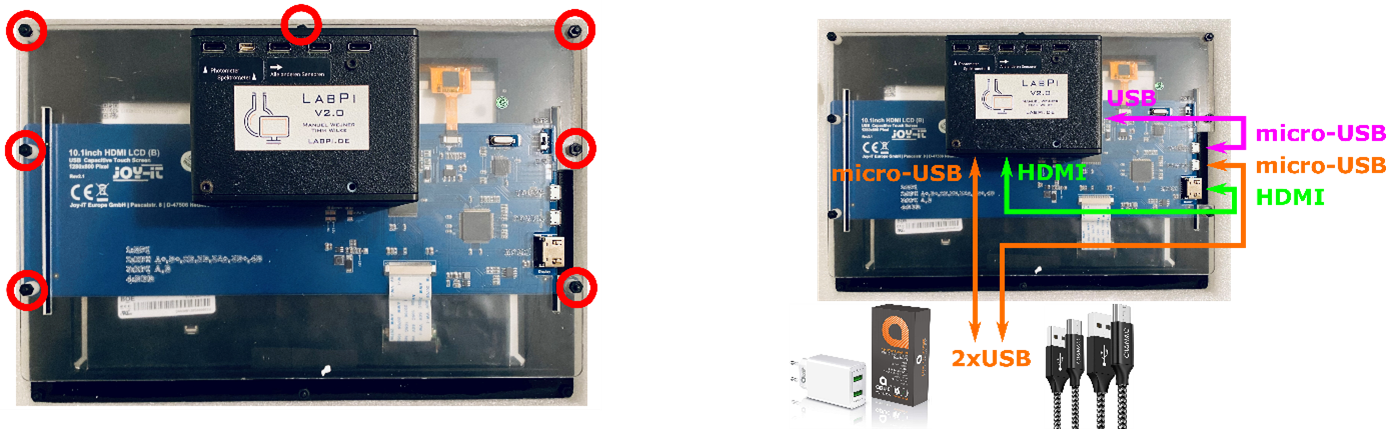
Here you can download instructions for assembling LabPi. Each device takes only a few minutes to set up and, apart from your fingers, no tools are required.
Videos on assembly and operation will be published here soon. We still need a little time, so thank you for your patience.
Training
At the GDCh teacher training center Northwest (Osnabrück & Bremen), training courses on LabPi for beginners and advanced users are offered on a regular basis. The online sessions are free of charge and last about two hours. If you already have a LabPi, you can experiment together with us. If you do not yet have one, you can still get a first-hand impression of how it is used.
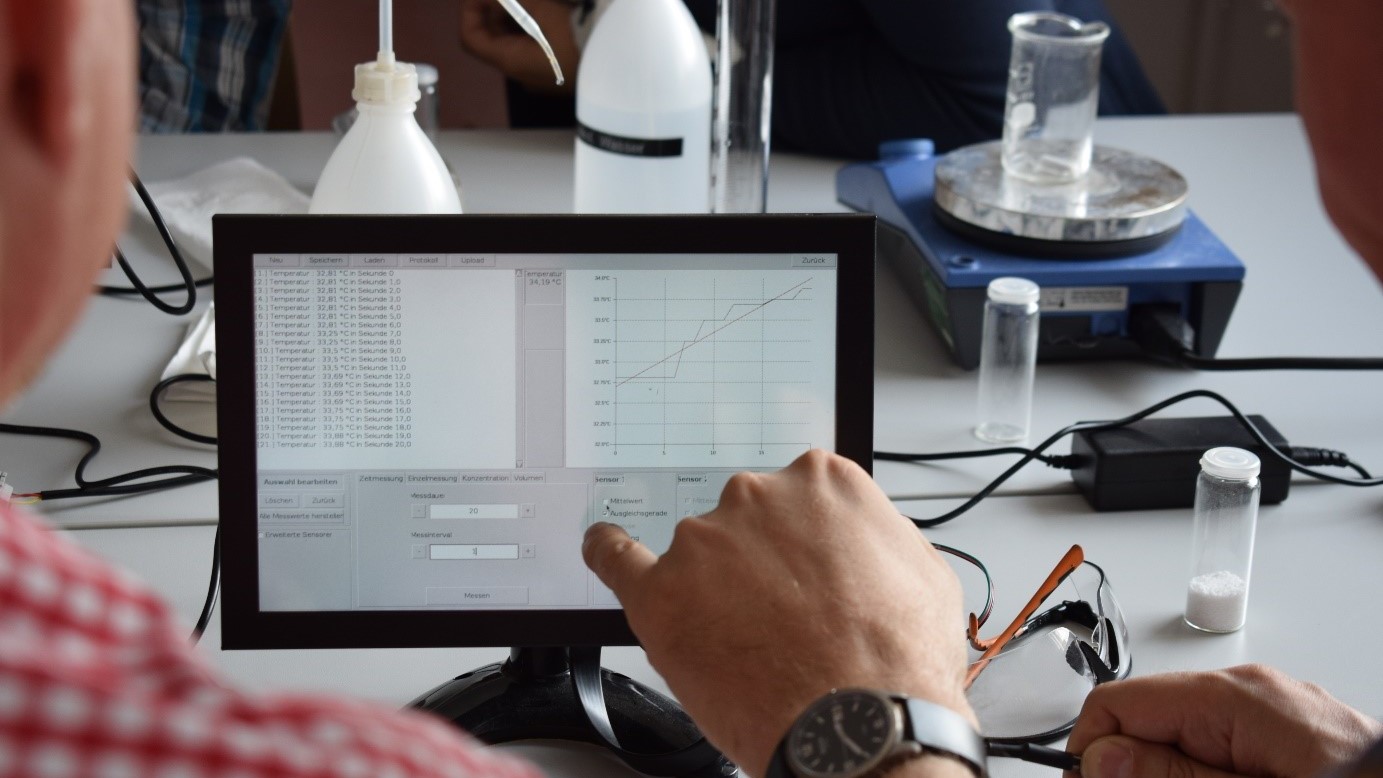
Low-cost, high-tech: getting started with the digital measuring station LabPi
Modern, digital science teaching often presents major challenges. Digital measuring equipment is frequently insufficiently adapted to classroom needs, expensive or primarily designed for research. As a result, only a small number of devices is available, procedures have to be explained repeatedly, or the recording of quantitative variables is guided more strongly by the teacher, which often leads to passive learning phases. Mini computers such as the Raspberry Pi offer an affordable way to address these challenges. Combined with suitable sensors and software, they can serve as digital measuring stations and open up many possibilities for quantitative measurement and analysis. Beyond data collection, networking several mini computers also creates additional digital methods for comparing and analyzing measurement data.
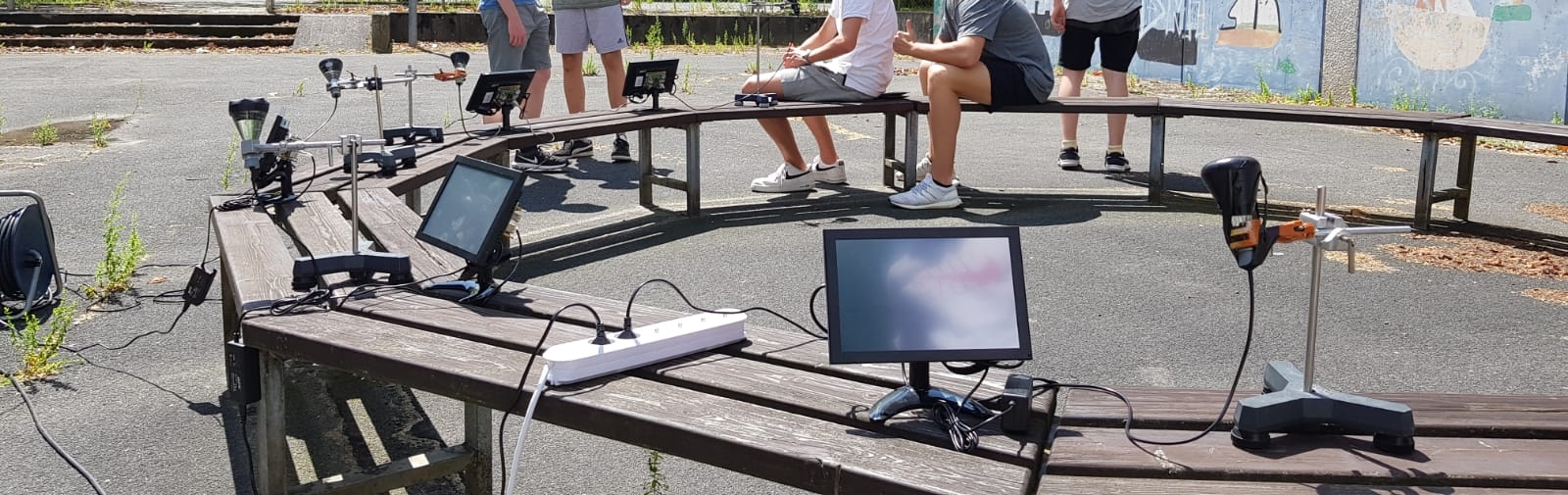
Interdisciplinary projects with LabPi
Digital measuring stations open up a wide range of possibilities in interdisciplinary research, environmental projects, "Jugend forscht" projects and citizen science. However, costs, operation and technical know-how often create barriers when such projects are carried out with students. LabPi is intended to make the implementation of different project ideas easier. The basis is the Raspberry Pi mini computer combined with low-cost sensors. Quantitative variables can be recorded with the help of a user interface developed specifically for teaching.